Pinjore Garden Chandigarh: Timings, Entry Fee & History
Pinjore Garden Chandigarh: Timings, Entry Fee & History
Yadvinder Garden was originally built by Fidai Khan, a general of Aurangzeb, the sixth Mughal emperor, in the 17th century. Whether you are a history buff, a nature lover, or a culture enthusiast, you will find something to enjoy and appreciate in this garden. This stunning garden is one of the best examples of Mughal architecture and landscaping in India, and a perfect destination for a relaxing and refreshing getaway. We bring you the best of lifestyle, events, locations, and personalities.
World’s largest safari park in Haryana
Various competitions are held during the festival like drawing, rangoli, folk dance, and Mehendi competition. The visitors are also entertained with a plethora of evening performances including dance, music, and drama. The Pinjore Heritage Festival is celebrated every year in December as a tribute to the rich legacy of this garden. The next two levels lie dotted with lush green trees and sparkling fountains.
Overview & History
- With its sprawling terraced lawns, cascading fountains, and ornate palaces, Yadavindra Gardens transports visitors to a world of serenity and splendor.
- Though, it is advisable to visit in the evening to cherish the beauty of the garden.
- It is said that this garden was for Aurangzeb’s summer retreat and that he himself had quite an input on the design of the garden.
- In April, the vibrant festival of Baisakhi attracts people from all over the country to Pinjore, and July marks the festival of mouth-watering mangoes.
- Unfortunately, that potential is currently lost to neglect, earning the gardens a modest 3 stars.The main issue is the lack of proper maintenance – the gardens are frankly in shambles.
- Pinjore Baisakhi Festival, a two-day spring festival of Vaisakhi is usually held in April of every year, with regional gourmet food, traditional handlooms and handicrafts, live folk arts and cultural performances, specially by the Haryana State Department of Information, Public Relations & Cultural Affairs at 6 pm.
- The main entrance opening into the first of seven terraces has been decorated in Rajasthani- Mughal Style, the first terrace is given the name of Shish Mahal- the palace of glass and lies adjacent to Hawa Mahal- the palace of air.
Entry charges for the Pinjore Garden Water Park are separate, so if you plan to visit the water park, you will need to purchase an additional ticket. In April, the vibrant festival of Baisakhi attracts people from all over the country to Pinjore, and July marks the festival of mouth-watering mangoes. In December, it hosts the Pinjore heritage festival. However, if you want to enjoy the festivals here, you should visit the Garden between November and August. Pinjore Garden is a huge garden featuring seven terraces. During the festival, the garden is decorated and illuminated with lights.
The residential palaces in the initial level have been tastefully transformed into a hotel and restaurant. This chute, called chini-khana, has niches in which camphor lamps used to burn at night and bouquets of fragrant flowers were kept during the day. Soon, a rumour was spread that the air and water of Pinjore were causing goitre. However, Fidai Khan’s summer retreat alarmed the neighbouring hill rajas “for they dreaded the coming of the Mughal Court, and feared still more to lose the use of the precious water which irrigated the surrounding country,” says Villiers-Stuart.
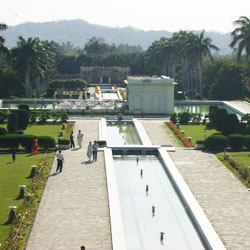
The garden was built in the foothills of the Great Himalayas as a summer retreat for Mughal emperor Aurangzeb. It is styled by the magnificent mughal architecture and later renovated by Jat Sikh Rulers of Patiala. Yadavindra Gardens which was previously known as Pinjore Garden is a 17th century garden situated in Pinjore in district Panchkula in Chandigarh Tricity.
Pinjore gardens are also Yadavindra Gardens called as Yadavindra Gardens and were constructed by the architect Nawab Fidai Khan in the 17th century. The extensive use of marble is also evident in the fountains, stone pathways, and intricately designed pavilions, contributing to the overall grandeur of the gardens. There is a nominal entrance fee to visit the gardens. The best time to visit Yadavindra Gardens is during the spring (February to March) and early winter (October to November) when the weather is pleasant and ideal for outdoor activities. The terraces are connected by a series of cascading waterfalls and fountains, creating a soothing and mesmerizing ambiance. The gardens are divided into seven terraces, each with its unique charm and character.

The area has been designed to incorporate terrace gardens, grand pavilions, and captivating fountains. It is not just the garden's history and beauty that attract visitors but also the effort put into maintaining and showcasing the rich cultural heritage of the region. At the heart of the Pinjore Gardens lie the central waterway highlighted by beautiful fountains and lined with trees, offering a regal ambience that transports visitors through time. Over the years, it has attracted countless visitors with its tiered gardens, captivating water features, and the grandeur of the Shish Mahal and Hawa Mahal located within its precincts. Located in the majestic land of Chandigarh, the Pinjore Gardens, also known as Yadavindra Gardens, is a spectacular Mughal-style garden that invites visitors to embrace the confluence of history, culture, and natural beauty.
The locals started believing that the water and air of Pinjore have got contaminated and they left the beautiful place to never come back. An interesting thing about the garden is that the garden was abandoned due to Goitre, a disease that is caused due to lack of Iodine intake. Situated in the foothills of the Himalayas the garden is home to rare species of flowers and plants. Yadavindra Garden was the ancient name of this beautiful garden of Poinjore. The garden remains open for all days of the week from 7 am to 10 pm. The place is popular not just for the garden but also for the annual Mango Mela.
The temple is created in Mughal style arranged out on seven terraces. In the 20th century, further enhancements were made by the last Maharaja of the Patiala dynasty, Maharaja Yadavindra Singh, in whose memory the garden was renamed Yadavindra Gardens. The garden, originally known as the Persian Gardens, was built in the 17th century during the reign of Mughal emperor Aurangzeb by Fidai Khan Koka, Aurangzeb’s foster brother. The main entrance leads to the highest terrace, where a palace stands as a testament to the fusion of Rajasthani and Mughal architectural elements. Drawing inspiration from renowned gardens like Shalimar Bagh in Kashmir. Spread over 100 acres, the garden reflects the grandeur of Mughal architecture with elements of Rajasthani and Persian styles.